
Категории товаров:


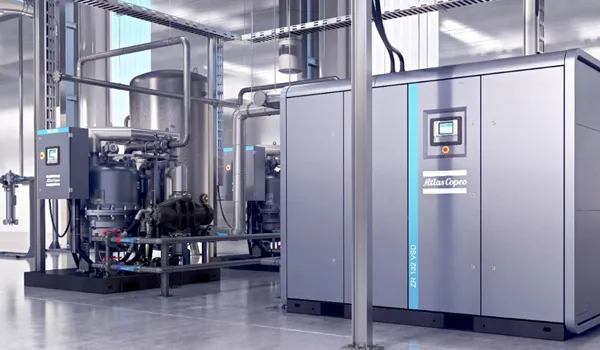





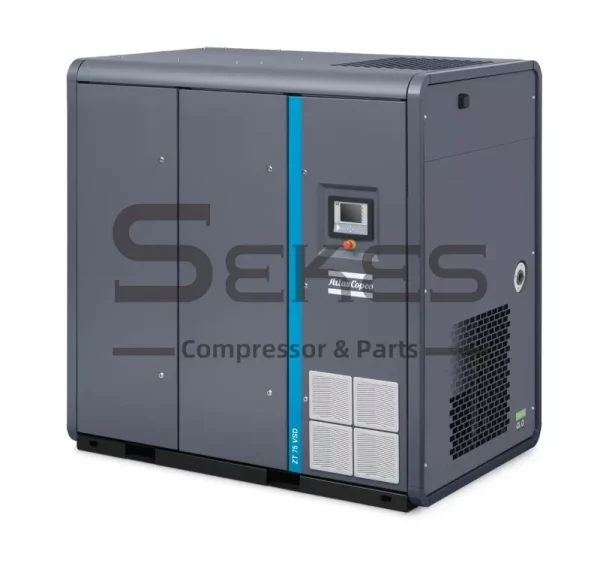
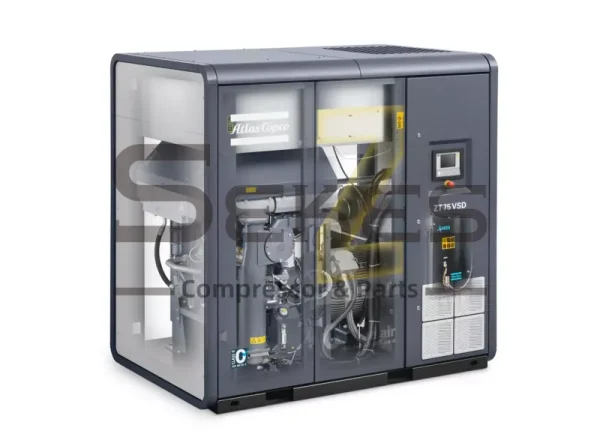
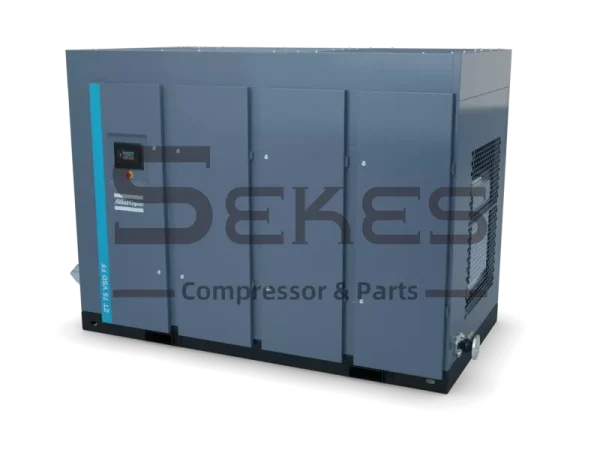
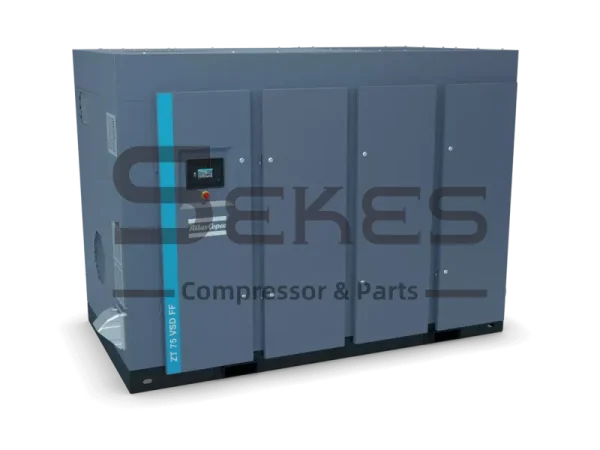
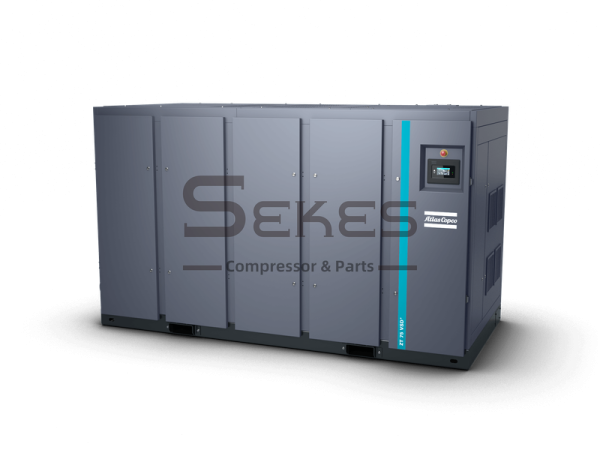
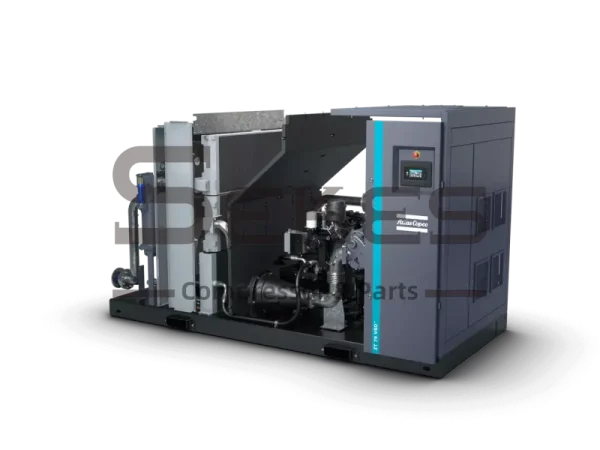
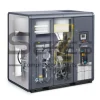
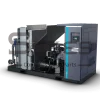
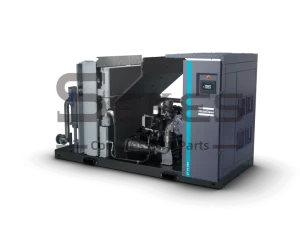
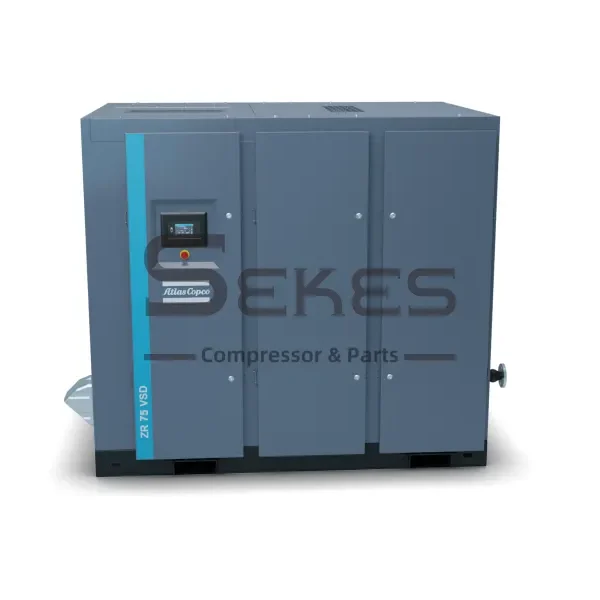
Atlas Copco ZT 75 VSD (FF VSD⁺) Oil-free Air Compressor
$45,000.00
The Atlas Copco ZT 75 VSD is the 75 kW (100 hp) air-cooled oil-free compressor listed at 8.6 and 10.4 bar(e), with a ZT 75 VSD⁺ branch that pairs the two-stage drive with an integrated rotary drum dryer. Send us the model you currently run and the working pressure at your header, and we will confirm which pressure class and which build applies before we quote the Atlas Copco ZT 75 VSD configuration.
Максимальное рабочее давление, бар (э)
10.4
Максимальное рабочее давление, фунты на квадратный дюйм
150
Установленный двигатель
75 kW
Установленная мощность двигателя
100 hp
Производительность FAD л/с
74 - 252
Производительность FAD м³/мин
4.4 - 15.1
Производительность FAD, куб. футов в минуту
157 - 534
Уровень шума
63 dB(A)
Размеры (Д × Ш × В)
3400 × 1660 × 2000 mm
Страна происхождения
CN
Код ТН ВЭД
8414804990
Время выполнения
2-4 недели
MOQ
1 единица
Упаковка
Деревянный ящик
Качество продукции
100% Подлинник, 100% Оригинал, Brand New
Режим транзакции
CFR, CIF, CIP, CPT, DAP, DDP, EXW, FCA
The Atlas Copco ZT 75 VSD is a 75 kW (100 hp) air-cooled oil-free screw compressor published at 8.6 and 10.4 bar(e) on a single-inverter platform, with a second ZT 75 VSD⁺ platform that adds a NEOS inverter per compression stage and a choice of Pack or Full Feature build. The two tables do not simply repeat each other: at 10.4 bar(e) the single-inverter Maximum row prints 96–176 l/s, while the ZT 75 VSD⁺ Pack Maximum prints 76–180 l/s.
That 20 l/s gap at the lower edge decides how far down the drive can track a night shift, so it is one of the first figures a plant should read when choosing between the two platforms. Compression heat leaves with the cooling air, which is why the ZT 75 VSD suits halls with no tower and no water loop.
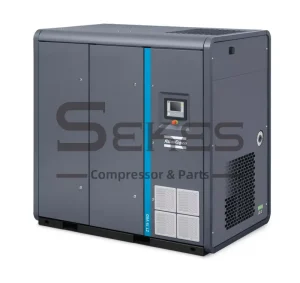
Each class is printed as three measured points: Minimum at the lowest working pressure with its flow band, Effective at the 7 or 9 bar(e) point, and Maximum at rated pressure. The ZT 75 VSD carries a 75 kW (100 hp) motor across both classes, and the data sheet places the Standard and FF weights beside the metric and imperial flow columns rather than in a separate note.
| Pressure class | Point | FAD (l/s) | FAD (m³/min) | FAD (cfm) | Standard / FF (kg) |
|---|---|---|---|---|---|
| 8.6 bar(e) | Minimum (4 bar(e)) | 75–252 | 4.5–15.1 | 160–534 | 2030 / 2630 |
| 8.6 bar(e) | Effective (7 bar(e)) | 75–217 | 4.5–13.0 | 158–460 | 2030 / 2630 |
| 8.6 bar(e) | Maximum (8.6 bar(e)) | 74–198 | 4.4–11.9 | 157–420 | 2030 / 2630 |
| 10.4 bar(e) | Minimum (4 bar(e)) | 75–252 | 4.5–15.1 | 159–534 | 2030 / 2630 |
| 10.4 bar(e) | Effective (9 bar(e)) | 74–193 | 4.4–11.6 | 157–409 | 2030 / 2630 |
| 10.4 bar(e) | Maximum (10.4 bar(e)) | 96–176 | 5.7–10.6 | 203–373 | 2030 / 2630 |
Both Minimum rows open at 75–252 l/s, with the imperial column at 160–534 cfm for the 8.6 bar(e) class and 159–534 cfm for the 10.4 bar(e) class. Divergence starts at Effective, where the lower class holds 75–217 l/s and the higher class drops to 74–193 l/s. At Maximum the difference is sharper: the 10.4 bar(e) row begins at 96 l/s and closes at 176 l/s, against 74–198 l/s at 8.6 bar(e). A header that sits near 7 bar(e) is read against the Effective row, while a line that works close to rated pressure is read against the Maximum row, where 22 l/s of upper flow is traded for the extra pressure headroom.
The identical Minimum band means the low-flow floor does not drive the choice between the two ZT 75 VSD classes.
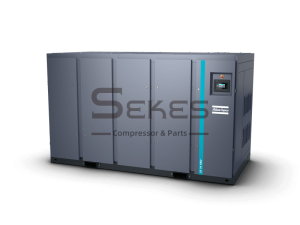
The ZT 75 VSD⁺ Pack and Full Feature Rows
The ZT 75 VSD⁺ is published at 10.4 bar(e) / 150 psig with four points per build: Minimum, Effective at 7 bar(e) / 101 psig, a 9 bar(e) / 130 psig point, and Maximum. Two NEOS inverters drive the two compression stages independently. The Full Feature (iMD) build puts the dryer inside the same canopy, and its rows are listed separately from the Pack rows rather than being inferred from them.
| Build | Рабочее давление | Point | FAD (l/s) | FAD (m³/min) | FAD (cfm) |
|---|---|---|---|---|---|
| Упаковка | 10.4 bar(e) / 150 psig | Minimum (4 bar(e) / 58 psig) | 79–241 | 4.8–14.4 | 168–510 |
| Упаковка | 10.4 bar(e) / 150 psig | Effective (7 bar(e) / 101 psig) | 79–227 | 4.7–13.6 | 167–482 |
| Упаковка | 10.4 bar(e) / 150 psig | 9 bar(e) / 130 psig | 78–200 | 4.7–12 | 164–424 |
| Упаковка | 10.4 bar(e) / 150 psig | Maximum (10.4 bar(e) / 150 psig) | 76–180 | 4.6–10.8 | 161–382 |
| Full Feature (iMD) | 10.4 bar(e) / 150 psig | Minimum (6 bar(e) / 58 psig) | 79–241 | 4.8–14.4 | 168–510 |
| Full Feature (iMD) | 10.4 bar(e) / 150 psig | Effective (7 bar(e) / 101 psig) | 79–227 | 4.7–13.6 | 167–482 |
| Full Feature (iMD) | 10.4 bar(e) / 150 psig | 9 bar(e) / 130 psig | 78–200 | 4.7–12 | 164–424 |
| Full Feature (iMD) | 10.4 bar(e) / 150 psig | Maximum (10.4 bar(e) / 150 psig) | 76–180 | 4.6–10.8 | 161–382 |
Pack and Full Feature bands are identical point for point: 79–241, 79–227, 78–200, and 76–180 l/s. The printed difference is the stated Minimum pressure, 4 bar(e) / 58 psig for the Pack and 6 bar(e) / 58 psig for the Full Feature (iMD) build, so a low-pressure interlock is set against a different point once the internal air treatment path is included. The ZT 75 VSD⁺ keeps the 75 kW (100 hp) motor on both builds, and 10.4 bar(e) is the pressure class published for this air-cooled platform.
Compared with the ZT 75 VSD single-inverter Maximum of 96–176 l/s, the 76–180 l/s row reaches 20 l/s further down at the low end and 4 l/s higher at the top, which is the practical reason to look at both tables before fixing a turndown figure.
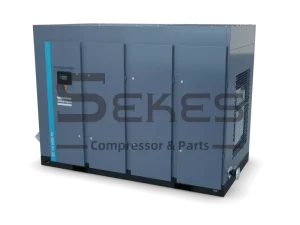
Air Cooling, Frame Weights, and Sound at the Work Station
The ZT 75 VSD rejects compression heat into the room air, so no cooling water circuit, tower, or pump set enters the installation scope. The ZT 75 VSD table states 76 dB(A) at the work station, while the ZT 75 VSD⁺ is published at 63 dB(A). Both are work-station values that can be checked against an operator position, and a 13 dB(A) difference matters most where people spend a full shift beside the canopy. Ventilation has to remove the heat, which makes the duct route part of the layout rather than an afterthought.
Frame dimensions and weights
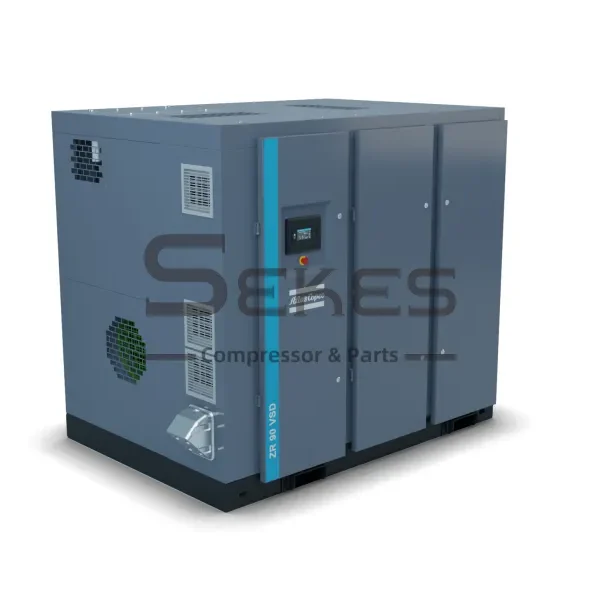
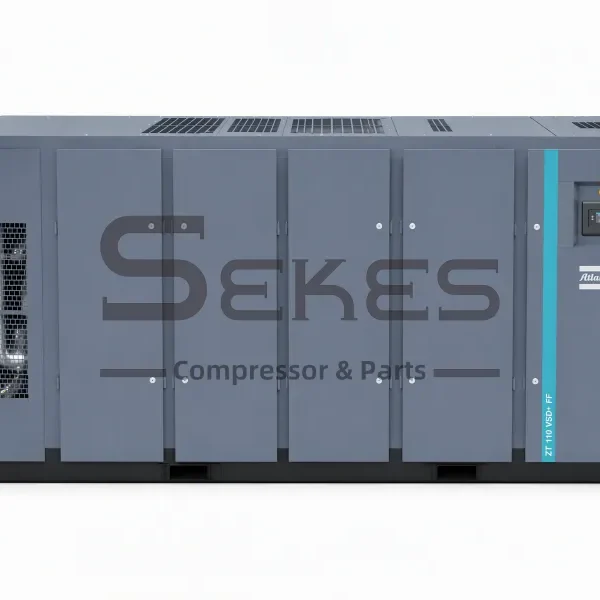
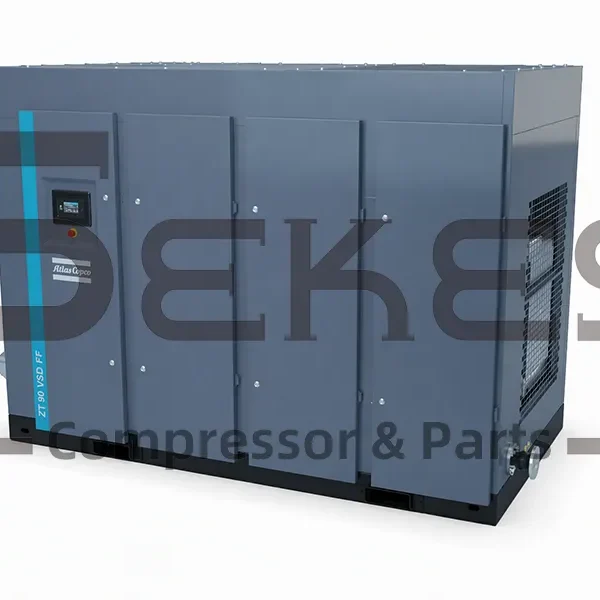
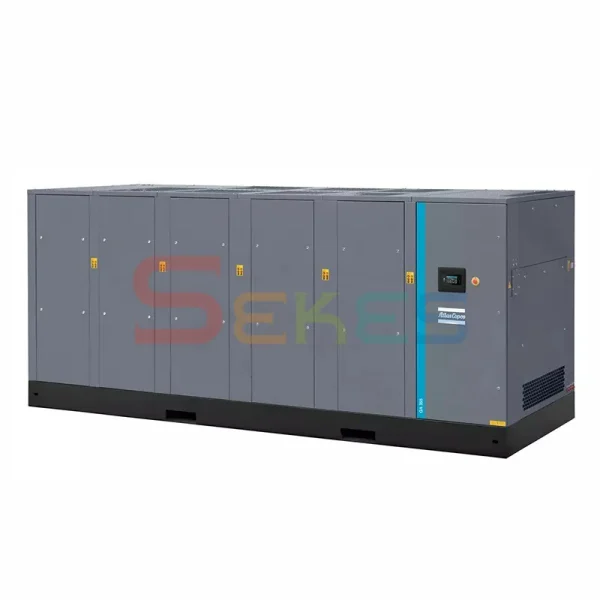
Weight separates the two platforms as clearly as the flow rows do. The single-inverter Standard frame is 2030 kg and its FF frame 2630 kg, while the dual-inverter Pack is 2795 kg. On the ZT 75 VSD the Standard frame is listed at 2180 × 1450 × 2184 mm and the FF frame at 2880 × 1450 × 2184 mm; the ZT 75 VSD⁺ Pack is published separately at 3400 × 1660 × 2000 mm.
A slab, a doorway, and the cooling-air duct route are all checked against the frame actually ordered, not against the shortest figure printed anywhere in this size class. The 600 kg gap between Standard and FF on the single-inverter machine belongs to the frame itself, because the dryer is inside the canopy.
Where the ZT 75 VSD Fits in a Plant
Oil-free air is specified wherever the compressed stream reaches a product or a surface to be sealed: filling halls, pharmaceutical packing rooms, electronics assembly, and finishing lines. Being air cooled, the ZT 75 VSD suits plants that have no water loop and no space for a tower, and Class 0 air removes the need to defend the process with a downstream lubricant filter.
The ZT 75 VSD 8.6 bar(e) class suits a header near 7 bar(e) with long part-load hours, the 10.4 bar(e) class serves a line that needs headroom above 9 bar(e), and the ZT 75 VSD⁺ answers duty that stays away from full load for much of the shift. Where the ZT 75 VSD has to carry the dryer inside the canopy, the Full Feature build removes a separate dryer tower and its own service position from the project.
Questions Buyers Ask About the ZT 75 VSD
Do both pressure classes of the ZT 75 VSD start at the same flow? Yes. Both Minimum rows print 75–252 l/s, at 160–534 cfm and 159–534 cfm. They separate from Effective onward, and the widest gap is at Maximum, where the 10.4 bar(e) row begins at 96 l/s instead of 74 l/s.
Does the Full Feature (iMD) build of the ZT 75 VSD⁺ change the flow figures? The bands stay at 79–241, 79–227, 78–200, and 76–180 l/s. What changes is the Minimum pressure, printed at 6 bar(e) for the Full Feature (iMD) build and 4 bar(e) for the Pack.
What sound level is printed for the ZT 75 VSD? The single-inverter table states 76 dB(A) and the dual-inverter table 63 dB(A), both measured at the work station, so they read directly against a plant’s operator-position limit.
Which ZT 75 VSD frame length has to fit through the door? The single-inverter Standard frame is 2180 mm long and its FF frame 2880 mm; the dual-inverter Pack is 3400 mm long. Checking the ordered build avoids a delivery that clears the doorway only in its smallest configuration.
From the ZT 75 VSD to the ZT 90 VSD
When a demand profile outgrows the 96–176 l/s Maximum row of the ZT 75 VSD at 10.4 bar(e), the next frame up is the Atlas Copco ZT 90 VSD, with a 90 kW (120 hp) motor, its own 8.6 and 10.4 bar(e) tables, and a VSD⁺ branch. That step is worth making only after these rows are read against the real header: a plant that never leaves the 7 bar(e) region gains nothing from a larger motor. Where the capacity is genuinely needed, the ZT 90 VSD keeps the same air-cooled arrangement and the same Pack or FF choice.
To settle which frame applies, send the model on your floor and the working pressure your process holds; we will confirm which pressure class and which build applies, then quote the configuration against those published rows. That keeps the ZT 75 VSD specification tied to measured figures and settles frame size, sound level, and air treatment before anything is ordered.
| Вес | 2795 кг |
|---|---|
| Размеры | 340.0 × 166.0 × 200.0 см |
| Максимальное рабочее давление, бар (э) | 10.4 |
| Максимальное рабочее давление, фунты на квадратный дюйм | 150 |
| Установленный двигатель | 75 kW |
| Установленная мощность двигателя | 100 hp |
| Производительность FAD л/с | 74 – 252 |
| Производительность FAD м³/мин | 4.4 – 15.1 |
| Производительность FAD, куб. футов в минуту | 157 – 534 |
| Уровень шума | 63 dB(A) |
| Размеры (Д × Ш × В) | 3400 × 1660 × 2000 mm |
| Страна происхождения | CN |
| Код ТН ВЭД | 8414804990 |
| Время выполнения | 2-4 недели |
| MOQ | 1 единица |
| Упаковка | Деревянный ящик |
| Качество продукции | 100% Подлинник, 100% Оригинал, Brand New |
| Режим транзакции | CFR, CIF, CIP, CPT, DAP, DDP, EXW, FCA |


Krzysztof Z -
We put the Atlas Copco ZT 75 VSD on a packaging line that drops to a skeleton crew at night. The 8.6 bar(e) table starts at 75 l/s and the drive followed the shift without the unload cycles of our old fixed speed unit. We took the Full Feature build, so the rotary drum dryer arrived inside the same canopy and only the air main and power had to be connected. At 76 dB(A) the machine stayed in the hall next to the operators.